Touch-Up Paint vs Professional Repair: Which Actually Works?
Touch-up kits handle small stone chips on flat panels, but not deep scratches, dents, or damage across a curved panel. Professional car scratch repair is the better answer once damage reaches the primer or bare metal. Victory Auto & Body Shop explains when each option makes sense.
The difference comes down to what sits under the paint. A touch-up kit applies color over a disrupted surface; a body shop corrects the surface first, then rebuilds color and clear coat to match the factory finish.
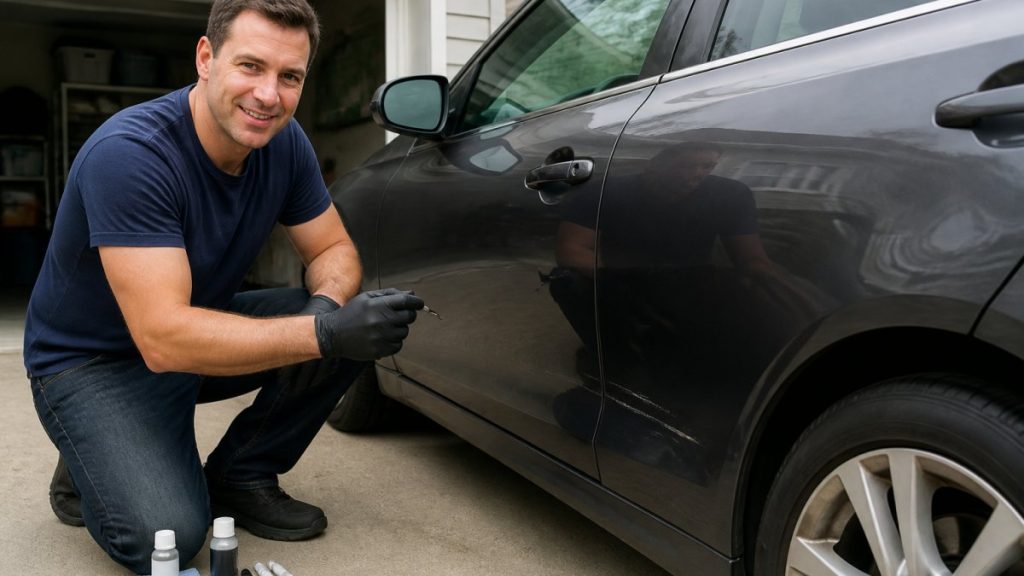
Touch-up kits suit isolated chips smaller than a pencil eraser, on flat surfaces, with intact surrounding paint.
Professional repair suits scratches you can feel with a fingernail, damage on curves and edges, and anything that has exposed primer or metal.
Professional Car Scratch Repair: What a Body Shop Does Differently
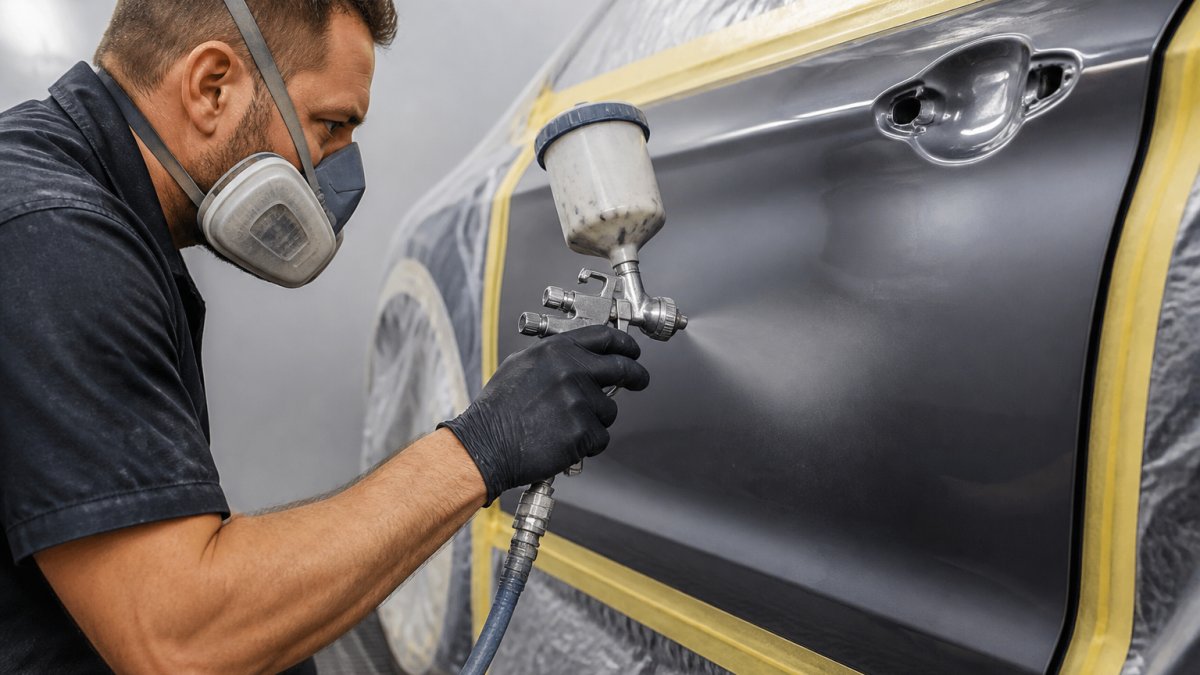
A body shop repairs the substrate, not just the color. The technician cleans and featheredges the damage, applies primer where needed, then builds color in thin coats before sealing with clear coat and polishing the blend.
Close-up of a technician in a clean auto body shop using a paint spray gun on a car door panel, with masking tape and color-matching equipment visible
Color matching is where most DIY attempts fail. Factory paint fades, so a code-matched bottle can still read differently against a three-year-old panel. An advanced paint system lets a shop tint and test the mix against the actual vehicle before spraying.
Car Scratch Repair Cost: DIY Kits vs Body Shop Pricing
DIY kits cost less up front. Body shop pricing depends on damage depth, panel count, and whether refinishing or replacement is needed, so we quote each vehicle individually. A single-panel spot repair and a multi-panel refinish are very different jobs.
Ask for an itemized estimate separating parts, labor, and paint materials, so you can compare a quote against a kit plus your own time and the risk of a visible result.
Factor
DIY Kit
Professional Repair
Up-front spend
Low
Quoted per vehicle
Color accuracy
Code-based, may not match faded paint
Tinted and tested against the panel
Durability
Limited on deep damage
Primer, color, and clear coat rebuilt
Resale impact
Visible patches can raise questions
Restores factory appearance
Best for
Isolated chips on flat panels
Scratches through primer, curves, dents
Pro Tip Run a fingernail across the scratch. If it catches, the damage is below the clear coat and a kit will only hide it, not repair it.
Frequently Asked Questions
When should I choose professional paint repair instead of a DIY touch-up kit?
Choose professional repair when the scratch reaches the primer or bare metal, spans multiple panels, or sits on a curved surface where blending matters. DIY touch-up kits work best on small chips and isolated scratches. For deeper damage, a body shop can color-match and apply clear coat for a factory-level finish. If the damage covers an area larger than a coin, or you see uneven paint after a kit attempt, professional car scratch repair is the safer choice.
Can a body shop repair a small paint scratch without repainting the whole panel?
Yes. The technician preps the area, applies color coat and clear coat, then blends the edges. This keeps the repair cost lower than a full repaint.
How much does professional car scratch repair cost compared to a DIY kit?
Professional car scratch repair cost varies by damage size and location. A small spot repair costs less than a full panel repaint. Request a written estimate and confirm whether the price includes color matching and clear coat. For lease returns or dealership inventory, professional repair often protects resale value better than a kit.
Small chips are a kit job. Anything you can feel, anything on a curve, and anything that has broken through to primer belongs with a shop that can match the finish properly. Victory Auto & Body Shop has spent 40 years restoring vehicles to original factory specifications, using an advanced paint system for identical color matching and high-quality parts. Book now and get an honest assessment of whether your damage needs a kit or a repair.