
- September 18, 2026
- By admin BM
- In Blog, collision repair
- Tags best rust preventative primer for cars, how to seal bare metal after sanding, preventing flash rust on auto body panels, preventing rust, preventing rust after body work
- 130
- 0

Last Updated: September 29, 2026
Preventing rust after body work comes down to one rule: never leave bare steel exposed. A repair can look perfect for months, then bubble as moisture rots the panel from the inside out.
Victory Auto & Body Shop has handled collision repair in South Florida for 40 years, and we see this constantly: a fender gets straightened and painted, then rust creeps along the seam two winters later.
Rust needs bare steel, oxygen, and moisture. Paint handles the outside, but hidden areas, seams, and panel backs stay bare, that is where trouble starts.
The National Highway Traffic Safety Administration guidance on vehicle safety and structural repairs notes that structural repairs affect crash performance. Corrosion in those same areas weakens them over time.
The best rust preventative primer for cars is an epoxy primer over clean, bare metal; it bonds tight and blocks moisture. A zinc-rich primer adds sacrificial protection for the steel underneath.
| Primer Type | Best For | Key Strength |
|---|---|---|
| Epoxy primer | Bare metal sealing | Strong moisture barrier |
| Zinc-rich coating | Weldable areas, seams | Sacrificial protection |
| Rust converter | Light surface rust | Stops existing rust |
A common mistake is skipping metal prep: primer sticks to clean steel, not oil or dust, so wipe the panel with wax and grease remover first. Rust converters use phosphoric acid to turn surface oxidation into a stable layer, but only work on light rust, not deep pitting.
For body panels, epoxy primer is the workhorse. Spray it on bare metal within hours of sanding to prevent flash rust.
Sealing bare metal means coating it fast, before flash rust starts.
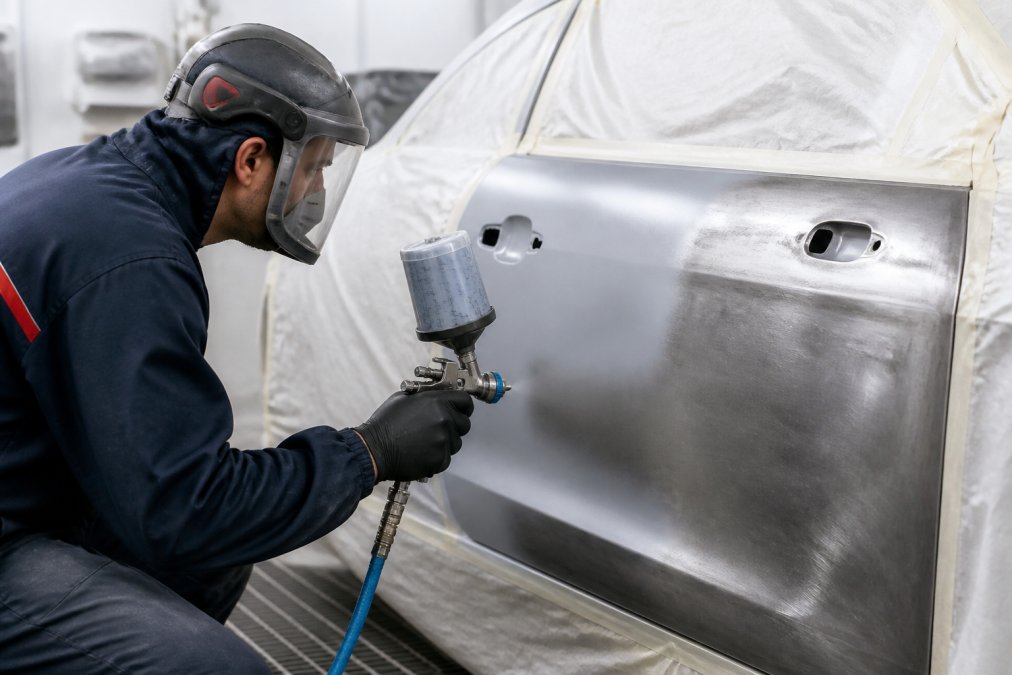
Total Time: 1-2 hours per panel
Difficulty: Intermediate
What You’ll Need: wax and grease remover, epoxy primer and hardener, spray gun and respirator, seam sealer, cavity wax.
Step 1: Clean the panel. Wipe away dust and oils with wax and grease remover, then let it dry.
Step 2: Prep the metal. Sand to bare steel, remove surface oxidation, and do not touch it with bare hands.
Step 3: Apply epoxy primer. Spray a thin, even coat on all bare metal, including edges and panel backs.
Step 4: Seal the seams. Once cured, run seam sealer along welded joints to stop water wicking into gaps.
Step 5: Protect hidden areas. Spray cavity wax inside frame rails and rocker panels, which trap moisture and rarely get paint.
Step 6: Recoat and paint. Add primer surfacer, block sand, then paint.
A frequent error is forgetting the back of the panel. If the front is sealed but the back is bare, rust returns. Coat both sides.
Some steps suit a home garage: cleaning and degreasing panels, spot sanding small areas, and spray-can primer on minor spots. Leave full-panel epoxy priming, seam sealing, cavity wax, and frame or structural repairs to a pro, moisture entrapment is the main DIY risk.
Rust prevention does not end when the paint dries. A simple schedule keeps panels protected.
| Timeframe | Task |
|---|---|
| After repair | Check seams and edges for gaps |
| Every 6 months | Wash and inspect for bubbles |
| Every year | Check undercoating and cavity wax |
Some rust problems are bigger than they look. Surface bubbles often hide deep pitting underneath.
Permanent rust prevention comes from removing all surface oxidation down to bare metal, then sealing that metal immediately with an epoxy primer. From there, seam sealer goes into panel joints, cavity wax protects enclosed areas, and undercoating shields the underside. Skipping any layer leaves a path for moisture to reach the steel. If rust is already present, it must be cut out or treated with a rust converter before priming, since coating over active rust only hides the problem until it spreads.
Epoxy primer is the most reliable choice for bare metal because it bonds directly to the substrate and forms a waterproof barrier that blocks moisture and oxygen. A zinc-rich coating adds sacrificial protection, meaning the zinc corrodes before the steel does. Primer surfacer alone will not stop rust because it is porous. For any panel stripped to bare metal, applying epoxy primer within hours of sanding is the standard practice that keeps rust from returning.
The biggest mistake is leaving bare metal exposed overnight, which allows flash rust to form before primer goes on. Other common errors include skipping wax and grease remover before sanding, trapping moisture under seam sealer, and ignoring hidden cavities behind panels where condensation collects. Using the wrong primer over body filler or bare steel also causes adhesion failure. Each of these shortcuts creates a weak point where corrosion resistance breaks down, often within a single season of environmental exposure.
Rust keeps coming back when repairs skip the metal underneath. Sealing bare steel, protecting seams, and coating hidden areas stops it for good. Victory Auto & Body Shop brings 40 years of experience, dealership-quality results, and a personal touch to every repair. Get started with Victory Auto & Body Shop and protect your vehicle’s value for years to come.


