
- October 7, 2026
- By admin-dr
- In Blog
- Tags auto body paint blending process, auto body paint matching, factors affecting car paint repair time, how long does auto body paint matching take, how to fix car paint scratches
- 89
- 0
Last Updated: October 2, 2026
Auto body paint matching takes one to three hours of color work, but the full process from drop-off to pickup usually spans two to five days once prep, painting, and curing are done.
At Victory Auto & Body Shop, we have handled collision repair and refinishing for four decades, and the question we hear most is why a small scratch takes days when the paint job takes minutes.
The auto body paint blending process is the sequence a technician follows to make a repaired panel look identical to the rest of the car: surface preparation, primer and base coat, then clear coat and curing.
What drives the clock: paint code lookup and mixing 20-40 minutes, surface prep and sanding 1-3 hours, primer and drying 2-4 hours, base coat and blending 1-2 hours, clear coat and curing 4-24 hours.
A common mistake is assuming the door-jamb paint code gives an exact match. Paint fades and factory batches vary, so a technician blends into surrounding panels rather than spraying one panel in isolation.
How to fix car paint scratches depends on depth: a clear-coat scratch can be polished out in under an hour, while one reaching bare metal needs a full refinish.
Run a fingernail across the scratch: if it catches, the damage has gone past the clear coat.
| Damage Level | DIY Time | Professional Time | Best Option |
|---|---|---|---|
| Clear coat scuff | 30-60 min | 1-2 hours | DIY polish |
| Base coat scratch | Not recommended | 1-2 days | Professional |
| Bare metal scratch | Not recommended | 2-4 days | Professional |
DIY kits work for light surface damage, but deeper repairs risk a mismatched patch. A professional shop uses a spray booth, color calibration system, and blending techniques a driveway repair cannot copy.
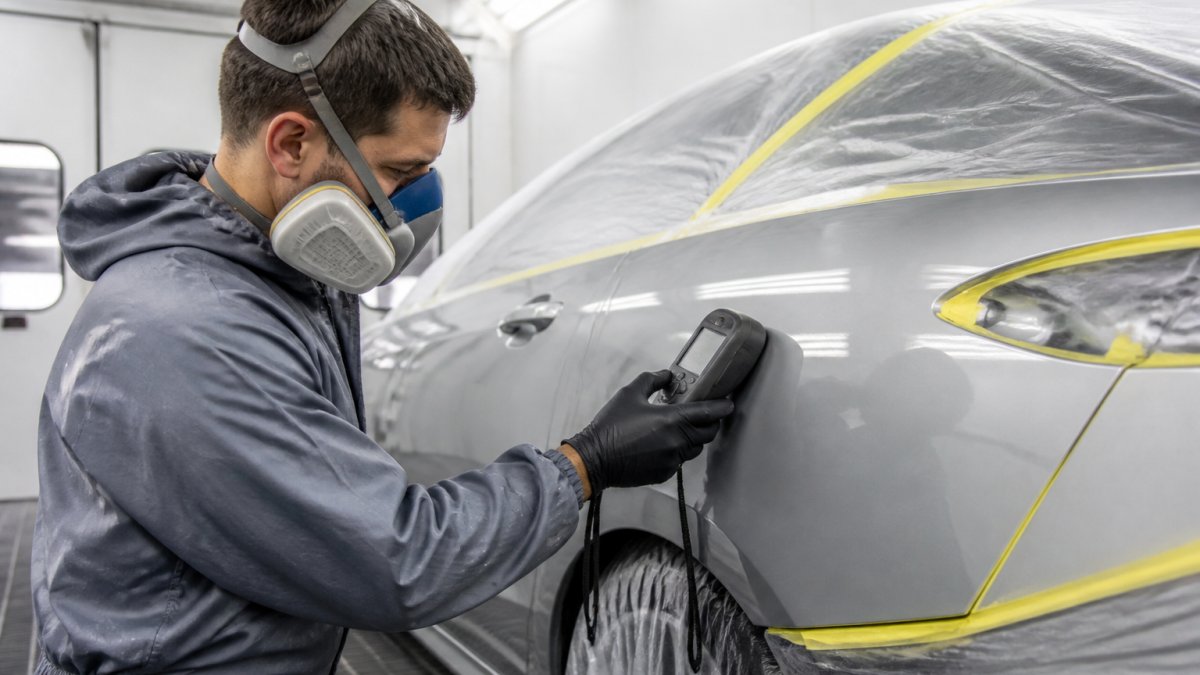
Most shops can get very close, but exact matches are rare because factory finish varies by plant, batch, and year. A spectrophotometer reads your car’s current color, then the shop adjusts the formula to account for fading and oxidation. Blending the new paint into adjacent panels hides any tiny difference. This is why auto body paint matching takes longer on older or sun-faded vehicles than on a newer one with a clean paint code.
Yes. A car that has spent years in the sun has paint oxidation and color variance that a factory paint code alone cannot predict. The technician has to scan the actual finish, mix a custom color formula, and test it before spraying. That extra step adds time to the auto body paint blending process, often a full day on top of a standard match.
Even a near-perfect color match can look slightly off where new paint meets old paint, especially with metallic flake or tri-coat finishes. Blending sprays a gradual transition across the neighboring panel so the eye cannot detect the seam. It adds time to the job, but it is the difference between a repair that disappears and one that always looks touched up.


