
- October 8, 2026
- By admin-dr
- In Blog
- Tags auto body paint matching process, cost of professional car paint repair, how to fix car paint scratches, is professional paint blending worth the cost, paint blending
- 79
- 0
Last Updated: October 3, 2026
Whether professional paint blending is worth the cost depends on how much you value a seamless finish. A small scratch on a daily driver rarely justifies it, but a damaged panel on a lease return, dealership vehicle, or car you plan to sell does. At Victory Auto & Body Shop, we have spent 40 years matching factory finishes for South Florida drivers.
Real cost-benefit analysis weighs the repair against resale value, finish durability, and how long the fix lasts. Paint blending is the process of feathering new paint into an existing panel so no hard color transition is visible. Skip it, and a repaired panel can read as mismatched under sunlight even when the color code is correct.
Three factors decide it: vehicle value, damage location (edges and adjacent panels demand blending; isolated bumper spots often do not), and your tolerance for a visible repair.
Fixing car paint scratches starts with identifying the scratch depth. Clear-coat scratches can often be polished out; scratches exposing primer or bare metal require paint, where color matching and blending decide the result.
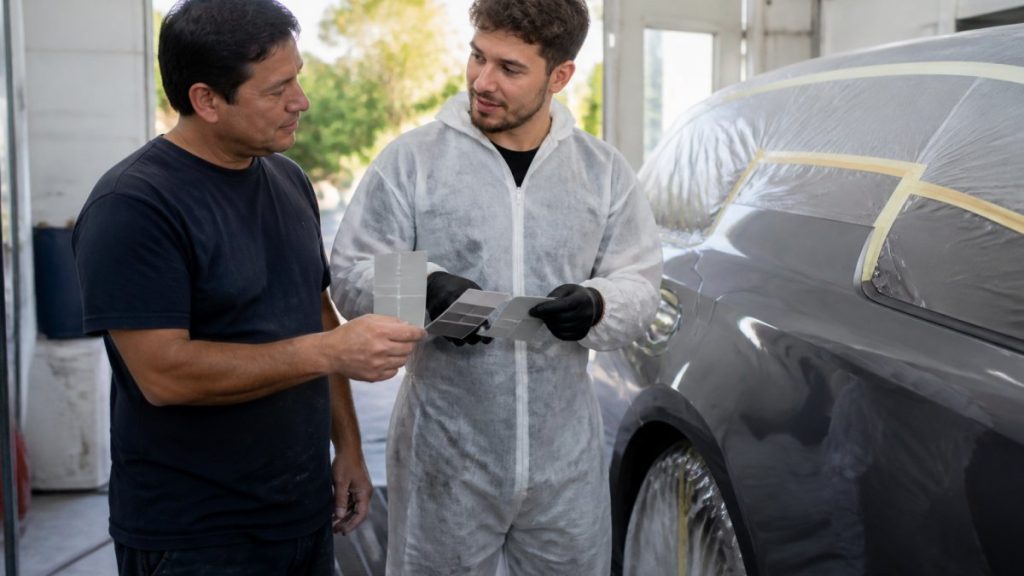
The auto body paint matching process follows a fixed sequence: surface preparation, primer and seal, color matching with a spectrophotometer or color chart (accounting for fade and variant codes), base coat, blending the new base coat into the surrounding panel, then clear coat, curing, buffing, and polishing to match texture and gloss.
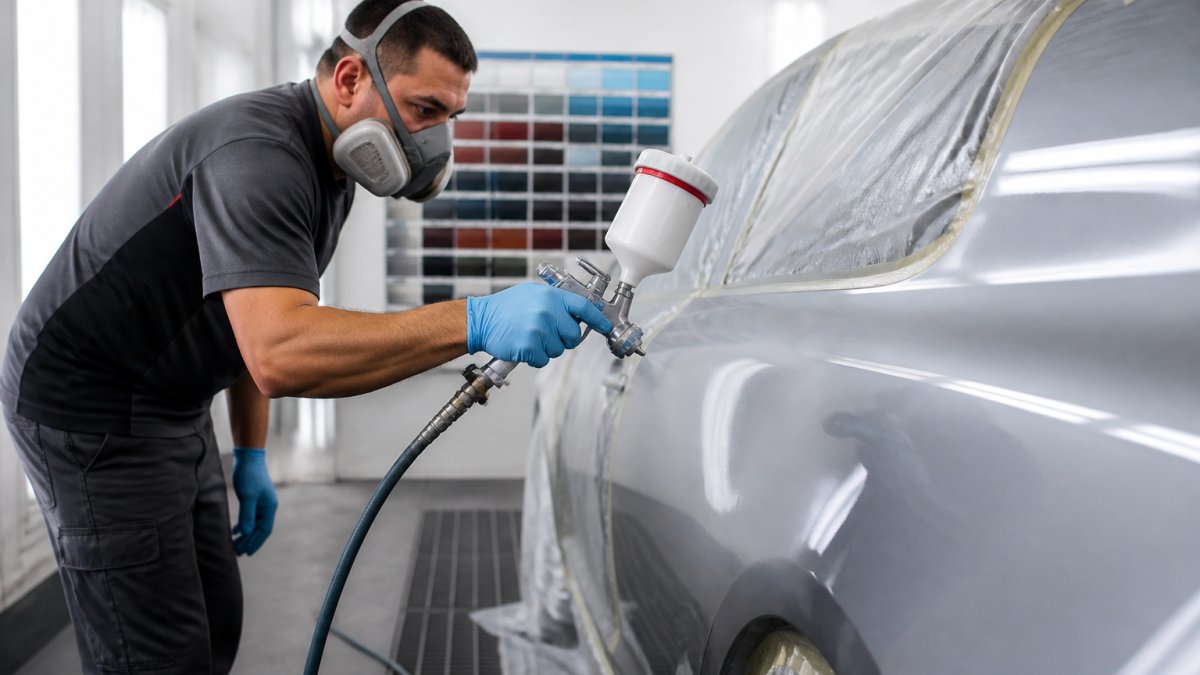
Two details separate a repair that disappears from one you can spot across a parking lot: pigment dispersion and texture consistency between the repaired area and the original finish.
The cost of professional car paint repair reflects labor, materials, and equipment needed to match a factory finish; DIY trades that money for time, risk, and a result that may not hold up.
| Factor | Professional Blending | DIY Spot Repair |
|---|---|---|
| Color matching | Spectrophotometer and variant codes | Off-the-shelf aerosol or touch-up |
| Finish durability | Cured, sealed, and buffed | Varies with product and technique |
| Visible transition risk | Low with a proper blend | High, especially on metallics |
Professional shops carry both solvent- and water-based systems to match the factory finish, while a DIY kit usually offers one option, which is why streaks and uneven gradients show up on home repairs.
Hire a professional when the car is leased, financed, part of a fleet, or headed for resale; DIY only when the scratch is shallow, the car is older, and a perfect match is not a priority. A scratch on a door next to an untouched fender almost always needs blending, while an isolated scuff on a plastic bumper is more forgiving.
Paint blending requires more labor and materials than a simple touch-up. A technician must prep the surrounding panels, mix a custom color match, apply a base coat, blend the edges, and finish with a clear coat. This multi-step process takes longer and uses more product, which raises the cost. The result is a seamless finish that a basic touch-up cannot achieve.
A properly blended repair preserves your car’s original appearance and avoids visible color transition lines. When a panel is repainted without blending, the mismatch is often obvious to buyers and inspectors, which can lower offers. Professional blending keeps the finish looking factory-original, protecting resale value and avoiding the suspicion that comes with a poorly matched repair.
Yes. Without blending, the repaired area often shows a different shade or texture under sunlight. You may see a hard line where the new paint meets the old, or the clear coat may reflect light differently. A paint depth gauge can also reveal uneven thickness. Professional blending avoids these tells by gradually transitioning the new paint into the surrounding panels.


