
- November 25, 2026
- By admin BM
- In Blog, Tips
- Tags aftermarket parts, are aftermarket parts allowed for lease return, lease return repair requirements, lease-end inspection aftermarket parts, oem vs. aftermarket parts for leased cars
- 15
- 0
Last Updated: November 6, 2026
Quick Summary
Whether aftermarket parts are allowed for lease return depends on your lease contract, not a general rule. Lessors expect the vehicle back in its delivered condition, so any change must be reversible. Some aftermarket additions may be acceptable when temporary and removable before return.
Whether aftermarket parts are allowed for lease return depends on your lease contract, not a general rule. You can check how insurance treats aftermarket parts after a collision before deciding. Lessors expect the vehicle back in its delivered condition, so any change must be reversible. LeaseEnd guidance on aftermarket parts for leased cars explains some aftermarket additions may be acceptable when temporary and removable before return.
Read the wear and use section before installing anything. Mazda Financial Services guidelines note lessors may waive excess wear and use charges for missing equipment, parts and accessories up to $500, but that waiver is not guaranteed for every item. Mazda Financial Services lease wear and use policy
OEM parts come from the manufacturer; aftermarket parts are made by other companies. For collision repairs, the difference matters for fit, finish and how the car is judged at return. Group 1 Collision comparison of OEM and aftermarket parts notes insurers sometimes favor aftermarket options to reduce claim costs.
Cosmetic parts don’t change crash test results. Insurance Institute for Highway Safety findings on aftermarket crash parts reports cosmetic aftermarket parts do not alter crash test results. Some lease agreements, however, explicitly require OEM parts, so check your contract.
The two part types differ in source, fit and how they may affect lease return, as summarised below.
| Item | Detail | Note |
|---|---|---|
| OEM parts | Come from the manufacturer | Some lease agreements explicitly require them |
| Aftermarket parts | Made by other companies | Insurers sometimes favor them to reduce claim costs |
| Cosmetic aftermarket parts | Do not alter crash test results | Per IIHS findings |
| Waiver for missing equipment or parts | Up to $500 (Mazda Financial Services) | Not guaranteed for every item |
Lease-end inspections check whether the vehicle matches its original condition. Capital One Auto Navigator guidance on modifying leased cars cites custom paint or wiring modifications as likely unsuitable, noting modifications requiring tools beyond a standard lug wrench are generally violations.

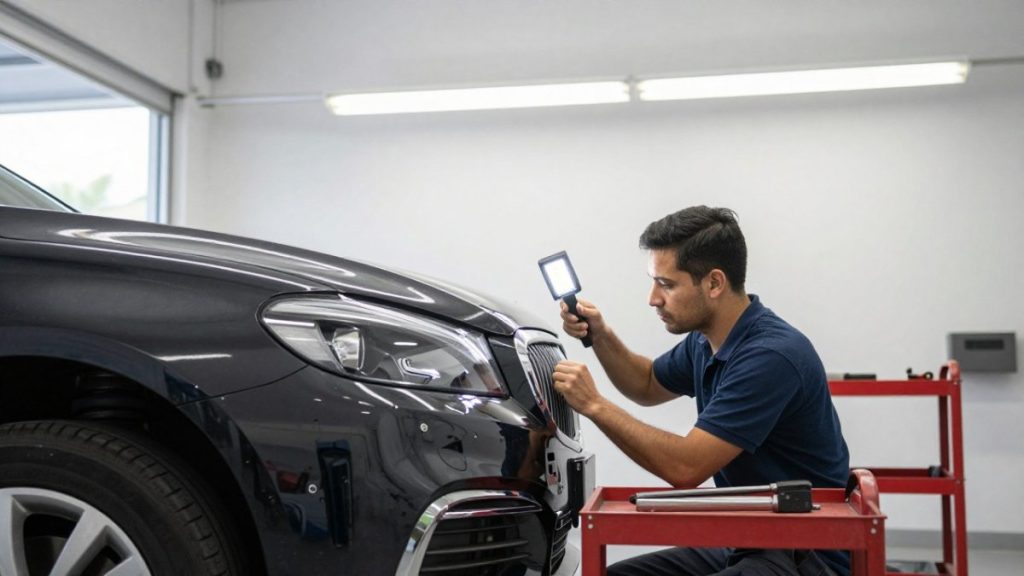
Before inspection, keep repair receipts and written lessor approval for any changes. If collision repairs are needed, Victory Auto & Body Shop lease return repair guidance can help restore the vehicle to factory specifications. You can also get a free auto body repair quote in four steps to plan the work before your lease ends.
Lease return repairs and their documentation cover what lessors expect at inspection.
Lease rules vary, so confirm the requirements in your agreement before you finish any repairs. If you want a second opinion on your vehicle’s condition, book an inspection with Victory Auto & Body Shop to review the repairs your lease requires.
Sometimes. Lessors generally allow modifications that are temporary, reversible, and removable without leaving damage, and LeaseEnd notes that some aftermarket additions may be acceptable on that basis. Modifications that need tools beyond a standard lug wrench or that alter paint or wiring are usually treated as violations. Check your lease contract before installing anything, and get written approval from the lessor when you are unsure.
They can. Lease-end inspections look for anything that differs from the condition the vehicle was delivered in. Aftermarket parts that remain on the car at return may be flagged, and lessors can charge for missing equipment, parts, or accessories. Removing non-factory parts and reinstalling originals before return is the safest course.
Some lease agreements explicitly require maintaining the vehicle with OEM parts, which prohibits non-OEM replacements. Where the contract is silent, the lessor’s standards still govern what is acceptable at return. Keep repair invoices that list the parts used, and ask the lessor in writing whether an aftermarket collision part is acceptable before the repair is done.


